Moving advice
Protecting furniture so it arrives the way it left
A removal truck is a rough ride for furniture. It is a metal box on two or three sets of springs, it brakes like it is carrying a house, and everything in it is stacked against everything else so that nothing can move. Protection is not an extra service you might add — for a crew like ours it is the job.
What wrapping is actually for
Wrapping does two jobs. It stops the things that scratch, chip, tear or get torn — glass tops, polished timber, fabric, paper, and anything with a sentimental value that could never be replaced. And it gives the crew a grip: a wrapped chair can be held by the frame rather than by the arm, and a wrapped wardrobe door will not snap off a hinge when it catches a door frame. People assume wrapping is about the finish. It is mostly about the hands.
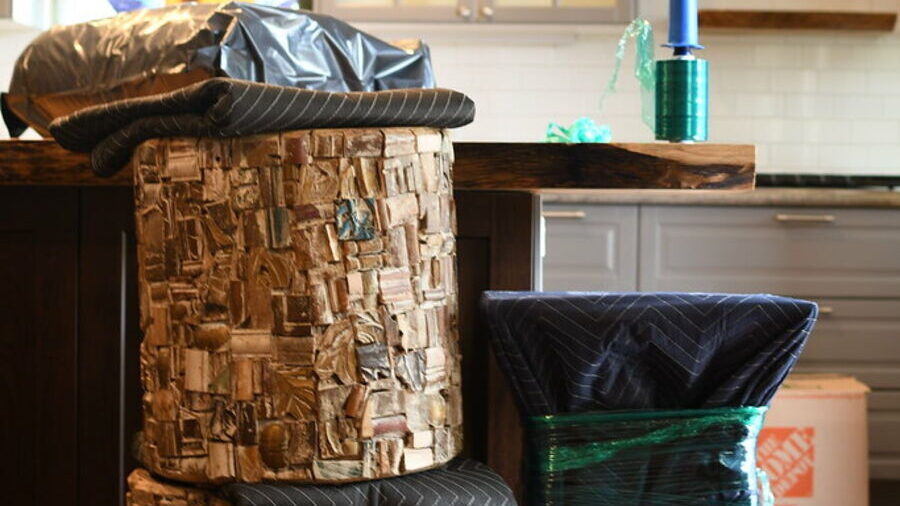
Blankets are for broad, flat surfaces — tabletops, mattress sides, the fronts of sofas. Film is for the awkward shapes, especially where parts move relative to each other: chair legs, a table in sections, a wardrobe with doors that can swing. The combination is what a proper wrap looks like, and it is why a wrapped armchair can be turned on its side to go through a doorway.
The pieces that break first
In thirty-eight years of loading households, the same list comes up every time. Table and desk tops, because they are lifted by an edge and carried through a door frame at an angle. Chair legs and the corners of cabinets, because that is where the load is gripped. Glass and mirror, because a wrapped mirror still breaks if the thing behind it is hard. Mattresses, because they are light enough to be tossed and awkward enough to be dropped. Anything already fragile, and anything glued rather than screwed together.
If you own a table you would be sad to lose, mention it on the phone before the move. It changes the order of the job, not the price of the job.
Take it apart where taking it apart is safer
Some pieces are better dismantled in the room than carried whole. A platform bed comes apart into flat pieces that go through any door. A wardrobe with solid timber doors can lose its doors, be wrapped separately and be rebuilt on the other side. A extendable table can be collapsed rather than lifted at an angle that was never designed for it. None of this is extra work for its own sake — it is the difference between one person carrying a heavy object through a hallway and two people carrying two light ones, which is the difference between a piece of furniture and a broken door frame.
If you are moving furniture on its own, the furniture removals page sets out the jobs we get most often.
How the load is built
Everything else comes down to the stack. Heavy, flat, full-width items go on the floor of the truck first, tight against the walls, because that is where the strength is. Fragile and finished surfaces go between, not on top, and never on the edge where a strap will cut into a table top. Soft, light items fill the gaps and stop the pieces moving. Nothing loose rides above the level of the box walls.
The order is chosen for both journeys: what comes off first is what you need first in the new house. That is a detail most people never notice until the day they move, when the kettle, the sheets and the light bulbs are the first things through the door.
Mike Moon has over 38 years in the furniture and home removal industry and is described as a master artist at stacking and loading a household, and the team is highly trained by him. That is what this article is describing: not a service level, just what a careful load looks like.
What you can do at your end
Three things help more than anything else. Take the drawers out of desks and dressers and put them in a box, so the carcass is not lifted by its own moving parts. Tape cupboard doors shut and mark which ones open, so nobody opens the wrong one on a full truck. And take the batteries out of anything with a remote in it — including the television, which is usually the largest, lightest and most awkward object in the house.
The rest is ours. Ring Mike on 027 474 8717 to talk through a job: quotes are free and carry no obligation, and the work can be priced as a quote or at hourly rates. There are no published opening hours, and no booking form — the call is the arrangement.